Exciting changes ahead!As part of Seably joining Mintra, we’re preparing to upgrade customers to Trainingportal. Migrations will be phased, and you’ll be fully informed before any changes. Learn more

Human Behaviour

Gain insights into human factors in maritime operations, understanding how behavior, communication, and decision-making impact safety and efficiency at sea.
    Course Types:

  • Ratings:

  • Top Authors:

  • Price:

  • Language:

  • Length:

In this course, we will look at effective drug and alcohol prevention. We will cover many aspects ranging from the risks involved to legal requirements and responsibilities of workers and employers.

This course is important for all staff, management and directors.

Regulations and Policies
58 minutes
Avg. rating 4.6

In this course, we will look at the importance of Equality & Diversity in an organisation. We will understand what is meant by 'equality' and 'diversity' and how we can implement this in our workplace.

Human Resource
1 hour and 8 minutes
Avg. rating 4.4

In this course, Crowd Management, you will get crucial information on how to handle guests during crises and emergencies. Travelling with several guests and being responsible for their lives is just a regular day within the Superyacht industry.

Human Resource
1 hour and 19 minutes
Avg. rating 4.7

Welcome to the Confidence course. This course designed to equip you with the essential skills and mindset necessary to have resilience, empathy, and strategic clarity in today's rapidly evolving landscape.

Health and Wellbeing
37 minutes
Avg. rating 3.9

This course gives additional training for operations in polar waters, underpinning the knowledge gained during STCW polar courses. In this course, deck officers will be given guidance and advice on machinery and engineering in polar waters. This course is not meant to be an approved STCW course but an additional training course for onboard learning.

Engineering
42 minutes
Avg. rating 4.3

Coaching is a means to guide people by improving their skills or developing new ones. It should be done in an effective manner.

Leadership and Management
14 minutes
Avg. rating 4.2

Working on any type of ship is a hazardous occupation, to which you are exposed as soon as you step onboard. It is necessary to understand the hazards, as well as equipment and procedures, to avoid the risks. There are several types of equipment on board a ship involving safety hazards. Everyone onboard must be aware of the likely dangers concerning this equipment.

Personal Safety
1 hour and 24 minutes
Avg. rating 4.4

This course discusses the Crude Oil Washing operation on tankers. This is a crucial operation that must be completed correctly. This is to ensure the maximum quantity of cargo can be turned out, all the while ensuring no pollution incidents occur and there are no risks of explosion during the washing cycle.

Cargo Handling
23 minutes
Avg. rating 4.5

This course introduces the legislation and guidance for Bridge Watch Handovers. The learner will explore the fundamental principles of handing over the watch as well as the practical applications.

Human Resource
29 minutes
Avg. rating 4.4

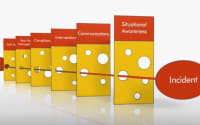
During incidents, many of the barriers that cause the incident have a human element to them. Unfortunately, an incident can happen to the best of professionals, if theses barriers fail.

Human Resource
28 minutes
Avg. rating 4.6

In 1973, IMO adopted the International Convention for the Prevention of Pollution from Ships, now known universally as MARPOL, which the Protocols of 1978 and 1997 have amended; it has been kept updated with relevant amendments. The MARPOL Convention addresses pollution from ships by oil; by noxious liquid substances carried in bulk; harmful substances carried by sea in packaged form; sewage, garbage and the prevention of air pollution from ships. MARPOL has greatly contributed to a significant decrease in pollution from international shipping and applies to 99% of the world’s merchant tonnage

Regulations and Policies
37 minutes
Avg. rating 4.6

Just culture is a work culture in which crew members do not fear to report errors, own as well as of others because they know that it is important not only for the organisation to learn from these honest mistakes but also for the seafarers’ safety on board. It is also a culture where deliberate misconduct may result in disciplinary action.

Regulations and Policies
37 minutes
Avg. rating 4.2