Exciting changes ahead!As part of Seably joining Mintra, we’re preparing to upgrade customers to Trainingportal. Migrations will be phased, and you’ll be fully informed before any changes. Learn more

All Topics

Designed for seafarers seeking to enhance their skills and knowledge in the maritime industry. These comprehensive courses cover a range of topics, including navigation, safety protocols, emergency procedures, and industry regulations.
Courses to Get You Started
    Explore:

  • Course Types:

  • Topics:

  • Ratings:

  • Top Authors:

  • Price:

  • Language:

  • Length:

This course gives additional training for operations in polar waters, underpinning the knowledge gained during STCW polar courses. In this course, deck officers will be given guidance and advice on personal health and safety in polar waters. This course is not meant to be an approved STCW course but an additional training course for onboard learning.

Personal Safety
33 minutes
Avg. rating 4.4

New crew members joining a ship must be familiarised with their duties and essential information about the ship. This ensures they understand their responsibilities thoroughly before commencing their duties. Proficiency and familiarisation are critical factors in preventing failures and safety hazards. Though all crew personnel joining the ship have to do STCW training, there are several specific instructions which are essential for safe operations on ships.

Personal Safety
1 hour and 8 minutes
Avg. rating 4.5

This course will introduce, explain and then teach you how to begin learning the International Regulations for Prevention of Collisions at Sea (Rules of the Road).

Navigation
3 hours and 23 minutes
Avg. rating 4.5

This course is intended to provide basic knowledge of the International Safety Management Code, ISM code. The purpose of the ISM Code is to provide an international standard for the safe management, safe operation of ships and pollution prevention. The ISM Code is one of the most fundamental regulations within international shipping. Therefore, knowledge about the rules is of utmost importance so that you are aware of the requirements and expectations.

Personal Safety
19 minutes
Avg. rating 4.6

In this course you will learn about The International Ship and Port Facility Security (ISPS) Code. This code describes how ships, ports and government agencies should act when it comes to security. It gives you guidance on how to act when working in the maritime industry.

Legislation
6 hours and 12 minutes
Avg. rating 4.2

The purpose of refrigeration systems on board vessels is to store temperature-sensitive cargo, perishable food supplies and air conditioning. In line with the Montreal Protocol, and as per MARPOL Annex VI, refrigeration installations must comply with various requirements, including the charging and discharging of systems, and the types of refrigerant utilised.

Engineering
39 minutes
Avg. rating 4.6

Having an understanding of the laws and theorems related to three-phase electrical power systems will aid in your course absorption. In this course, you will learn exactly what 'Per Unit Analysis' is and how manufacturers of equipment use it to rate their equipment.

Engineering
18 minutes
Avg. rating 4.6

In this course, how Digital Electric Circuits work in modern Intelligent Electrical Devices (IED's), logic gates, digital flip-flops and shift registers will be covered. The student should have a basic understanding of electrical circuitry and have the capability to read circuit diagrams to get the most from this course.

Engineering
1 hour and 58 minutes
Avg. rating 4.3

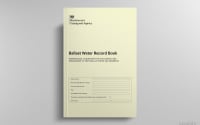
Ballast Water Record Book (BWRB) training is an essential component for maritime personnel involved in the operation and management of ships. This training is designed to familiarise individuals with the proper procedures and protocols outlined in the Ballast Water Management (BWM) Convention regarding the recording of ballast water-related activities.

Regulations and Policies
19 minutes
Avg. rating 4.6

The new SIRE 2.0 is a revolutionary new way of completing the inspection process, using digital hardware and a reporting portal rather than the paper inspection process.

Inspections
46 minutes
Avg. rating 4.4

Dive into the exciting world of coding without extensive knowledge of code! In this beginner's course, you'll learn how to create a Rock Paper Scissors game using Python and ChatGPT, harnessing the power of AI to build your first game project.

Information Technology
54 minutes
Avg. rating 5.0

Due to the nature of the work environment onboard ships, risks and hazards tend to be unavoidable. The ISM Code was introduced by the International Maritime Organization (IMO) to help in creating a standard for safety. Companies are nowadays required to provide ships with a safety management system that highlights the procedures that should be followed on board to ensure the protection of life, ship, and the environment. Additionally, safety culture is introduced both ashore and on board to assist with the continuous improvement of safety-related issues.

Personal Safety
46 minutes
Avg. rating 4.5