Exciting changes ahead!As part of Seably joining Mintra, we’re preparing to upgrade customers to Trainingportal. Migrations will be phased, and you’ll be fully informed before any changes. Learn more

All Topics

Designed for seafarers seeking to enhance their skills and knowledge in the maritime industry. These comprehensive courses cover a range of topics, including navigation, safety protocols, emergency procedures, and industry regulations.
Courses to Get You Started
    Explore:

  • Course Types:

  • Topics:

  • Ratings:

  • Top Authors:

  • Price:

  • Language:

  • Length:

The purpose of this course is to provide Engineers and shore superintendents with a basic knowledge of the source, use and precautions to be taken when using fuel oils on board ships. It covers Bunkering operations and the dubious practices used by some suppliers.

Engineering
2 hours and 2 minutes
Avg. rating 4.4

In this training, you will come on board a fully loaded bulk carrier, proceeding at full sea speed in conditions of heavy weather. While performing this training, ask yourself: - Could this happen to me?

Deck Operations
10 minutes
Avg. rating 4.6

In this course, we will learn about Generators (Alternators); Power Distribution to users; Synchronisation; Safety; and uncommon Maintenance issues. All these are from a practical perspective to help the Engineer deal with situations on board.

Engineering
32 minutes
Avg. rating 4.4

Why should we even worry about static electricity? What could be so dangerous with that, you might ask? Static electricity presents fire and explosion risks during the handling of flammable liquids. Several tanker operations could lead to static electricity accumulation, which could harm the vessel severely and lead to a disaster. The threat of static electricity must be taken seriously! This course aims to help crew members eliminate or minimise such to a safe level of such risks.

Deck Operations
1 hour and 35 minutes
Avg. rating 4.4

Cyclones are intense areas of low pressure where the associated maximum winds can be more than 70 knots generating sea swells of great heights. If a ship runs into cyclones or navigates areas affected by these winds and swells, it can sustain a loss of lives, loss of cargo and even loss of the ship itself. Hence, ship officers should learn techniques and strategies to avoid cyclones at sea.

Meteorology
26 minutes
Avg. rating 4.5

A good pilot must know that naval manoeuvring is not only affected by wind and sea. The invisible forces acting below the waterline are often much more powerful. Banks effects, tidal currents, ship interactions, etc. A pilot needs to consider this, evaluate and then adapt it to suit the current situation; ensuring a successful outcome.

Ship Handling and Manoeuvring
1 hour and 52 minutes
Avg. rating 4.3

This course is intended to give helpful information and travel advice about Caribbean diseases such as Zika virus, Dengue fever and Chikungunya.

Medical
23 minutes
Avg. rating 4.2

This course is to refresh the concepts covered by the Ship Security Officer course. It is not intended to replace the knowledge gained on that course or be used in place of it for approved certification.

Security
1 hour and 13 minutes
Avg. rating 4.5

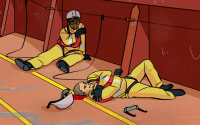
Enclosed Space Entry is one of the leading causes of casualties within the Shipping Industry. This keeps happening due to poor training and poor knowledge or disregard of the Procedures that should be followed. Every crew member should be knowledgeable, able and willing to carry out an Enclosed Space Entry in a safe manner. Various documentations onboard assist the crew to follow the correct procedures and ensure that all steps are covered, and nothing is missed prior to entry.

This course strives to explain the risks, procedures and contingencies related to enclosed space entry.

Deck Operations
2 hours and 44 minutes
Avg. rating 4.6

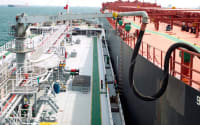
This course covers the main material included in the Advanced Oil Tanker Training course as set out by STCW. It is intended for all oil tanker personnel to refresh their knowledge as well as any prospective seafarers wanting to take the STCW oil tanker training in the future.

Deck Operations
4 hours and 32 minutes
Avg. rating 4.6

This course deals with the protection and control principles of high voltage stations. Strong background knowledge in electrical circuitry will assist your understanding of this subject.

Engineering
5 hours and 36 minutes
Avg. rating 4.1

In this course, you will gain an understanding of the basic concepts of fault studies on a high voltage three-phase system. We shall cover the methodologies of system faults and use system modelling to aid in the process.

Engineering
3 hours and 57 minutes
Avg. rating 4.3