Exciting changes ahead!As part of Seably joining Mintra, we’re preparing to upgrade customers to Trainingportal. Migrations will be phased, and you’ll be fully informed before any changes. Learn more

Human Behaviour

Gain insights into human factors in maritime operations, understanding how behavior, communication, and decision-making impact safety and efficiency at sea.
    Course Types:

  • Ratings:

  • Top Authors:

  • Price:

  • Language:

  • Length:

Modern ship construction uses complex methods of strengthening based upon framing systems. There are two main systems of framing, longitudinal and transverse.

Stability
13 minutes
Avg. rating 4.5

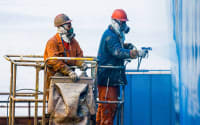
Drydocking a vessel is a dangerous and hazardous operation that requires expertise and caution to ensure that it is conducted safely and without incident.

Stability
23 minutes
Avg. rating 4.5

As vessels continue to increase in size, the power demand rises too, so more powerful engines and other equipment items must also be installed. The increased size and demand on power requires the use of higher voltages on board, enabling the efficient and effective transfer of energy throughout the vessel.

Engineering
47 minutes
Avg. rating 4.3

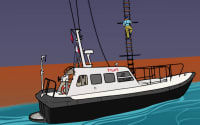
An introduction to the means of safe access to vessels, the correct rigging and maintenance.

Security
14 minutes
Avg. rating 4.7

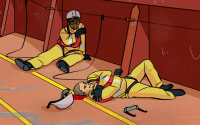
Under SOLAS requirements, vessels must complete drills on board at regular intervals to ensure that personnel and equipment are ready for emergencies that may develop. STCW amendments also require training to be conducted onboard to allow seafarers to renew their STCW certification without the need to complete the full course again every 5 years. Making the drills effective and useful is, therefore, a priority for vessel managers and Masters to ensure the training is relevant, no time is wasted and the seafarers receive value from the exercises.

Emergency Procedures
27 minutes
Avg. rating 4.2

This course is designed to teach maritime security professionals how to properly apply handcuffs to both compliant and non-compliant individuals.

This course covers mandates in the ISPS Code and SOLAS (Chapter 13 - Training)

Security
48 minutes
Avg. rating 4.6

The science of human performance studies how people interact with their work environment to complete tasks efficiently and effectively. This field of research aims to understand the factors that influence employee productivity so businesses can create optimal work conditions and improve worker productivity.

Human Resource
16 minutes
Avg. rating 4.1

This course aims to respond to the needs highlighted by the Hong Kong Convention of 15/05/2009; by Regulation (EU) no. 1257 of 11/20/2013 (amended by ‘Regulation (EU) 2024/1157’); by the Decree of the MIT of 27/05/2019; from the IHM Guidelines, resolution MEPC.269 (68) of 15 May 2015.

Environment and Sustainability
1 hour and 13 minutes
Avg. rating 4.2

In this course, we will talk about the deadly dozen. The deadly dozen refers to twelve common conditions that can act as precursors to human error; leading to incidents. These conditions can influence people to make unintentional mistakes.

Human Resource
38 minutes
Avg. rating 4.6

When you give corrective feedback to people, you aim at motivating them to change their actions or behaviours and improve their performance. To reach that goal, feedback must be expressed in a constructive manner.

Leadership and Management
25 minutes
Avg. rating 4.4

How should we communicate to avoid or at least reduce misunderstandings? Develop your skills in giving and receiving verbal instructions. Familiarise yourself with Maritime English and Standard Marine Communication Phrases (SMCP).

Communications
58 minutes
Avg. rating 4.6

The Oil Companies International Maritime Forum's Tanker Management and Self Assessment (TMSA) program is a vital component of ISM compliance for tanker vessels, despite being a voluntary undertaking.

Inspections
29 minutes
Avg. rating 4.5