Exciting changes ahead!As part of Seably joining Mintra, we’re preparing to upgrade customers to Trainingportal. Migrations will be phased, and you’ll be fully informed before any changes. Learn more

All Topics

Designed for seafarers seeking to enhance their skills and knowledge in the maritime industry. These comprehensive courses cover a range of topics, including navigation, safety protocols, emergency procedures, and industry regulations.
Courses to Get You Started
    Explore:

  • Course Types:

  • Topics:

  • Ratings:

  • Top Authors:

  • Price:

  • Language:

  • Length:

Level 3 Supervising food safety at sea is aimed to help supervisors and managers on board to support, train and implement excellent food safety practices as part of the food safety management system.

Interior and Service
2 hours and 31 minutes
Avg. rating 5.0

This IAMI GUEST Valet Service and Wardrobe Management Level 2 course is an intensive Learning Experience designed to develop your skills and knowledge in delivering and managing top-class services on board and understanding valet-related topics.

Interior and Service
1 hour and 1 minute
Avg. rating 4.3

This course takes you from the fundamentals of trigonometry to the more sophisticated requirements in electrical engineering. As you work and study electrical engineering you are going to run into proofs and equations that are based on trigonometry. Base knowledge of intermediate mathematics, equations and binomials will be advantageous.

Engineering
22 minutes
Avg. rating 4.6

Falling to a lower level is one of the most common workplace accidents, and falling from even a low height can be fatal. Working at Height is a course that gives basic knowledge of personal falling protection. When do you need to protect yourself or your employees from falling, how do you do it, and what equipment do you need?

Deck Operations
25 minutes
Avg. rating 4.4

Poor time management can lead to many negative outcomes. For example, deadlines being missed, staff becoming more stressed and organisations losing money; putting jobs at risk.

In this course, we will look at how to effectively manage our time, in and out of work. By doing so, we can become more productive, have more time for breaks, improve our mental health and lead a happier life.

This course is important for all workers, as effective time management is a skill that everyone should be working on continuously. As we will see in this course, there are always ways to improve ...

Human Resource
56 minutes
Avg. rating 4.5

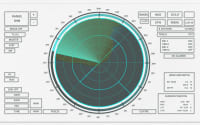
This course is based on the IMO requirements for radar at the operational level. It provides a comprehensive introduction to radar for watch officers.

Navigation
7 hours and 53 minutes
Avg. rating 4.7

Modern ship construction uses complex methods of strengthening based upon framing systems. There are two main systems of framing, longitudinal and transverse.

Stability
13 minutes
Avg. rating 4.5

Drydocking a vessel is a dangerous and hazardous operation that requires expertise and caution to ensure that it is conducted safely and without incident.

Stability
23 minutes
Avg. rating 4.5

As vessels continue to increase in size, the power demand rises too, so more powerful engines and other equipment items must also be installed. The increased size and demand on power requires the use of higher voltages on board, enabling the efficient and effective transfer of energy throughout the vessel.

Engineering
47 minutes
Avg. rating 4.3

An introduction to the means of safe access to vessels, the correct rigging and maintenance.

Security
14 minutes
Avg. rating 4.7

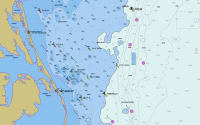
This course provides an in-depth exploration of Electronic Navigational Charts (ENCs), essential tools in modern maritime navigation. Participants will learn about the structure, functionality, and application of ENCs within Electronic Chart Display and Information Systems (ECDIS). The course covers key topics such as voyage planning with ENCs, understanding ENC accuracy and the importance of the Category Zone of Confidence (CATZOC), as well as the procedures for installing and updating ENCs.

Navigation
35 minutes
Avg. rating 4.6

Under SOLAS requirements, vessels must complete drills on board at regular intervals to ensure that personnel and equipment are ready for emergencies that may develop. STCW amendments also require training to be conducted onboard to allow seafarers to renew their STCW certification without the need to complete the full course again every 5 years. Making the drills effective and useful is, therefore, a priority for vessel managers and Masters to ensure the training is relevant, no time is wasted and the seafarers receive value from the exercises.

Emergency Procedures
27 minutes
Avg. rating 4.2