Exciting changes ahead!As part of Seably joining Mintra, we’re preparing to upgrade customers to Trainingportal. Migrations will be phased, and you’ll be fully informed before any changes. Learn more

Culture, Law and Policy

Explore the global context of maritime activities, delving into the cultural, legal, and policy frameworks that shape the industry.
    Course Types:

  • Ratings:

  • Top Authors:

  • Price:

  • Language:

  • Length:

This Leadership and Management Communication course is designed to equip you with the foundational skills and insights necessary to excel as effective leaders and managers in today's dynamic and interconnected business environment.

Leadership and Management
29 minutes
Avg. rating 3.9

Welcome. In today’s diverse world, understanding and embracing inclusion is essential for a thriving, innovative workplace. This interactive course equips you with the knowledge and skills to champion diversity in both personal and professional settings.

Human Resource
33 minutes
Avg. rating 4.2

Level 3 Supervising food safety at sea is aimed to help supervisors and managers on board to support, train and implement excellent food safety practices as part of the food safety management system.

Interior and Service
2 hours and 31 minutes
Avg. rating 5.0

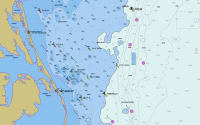
This course provides an in-depth exploration of Electronic Navigational Charts (ENCs), essential tools in modern maritime navigation. Participants will learn about the structure, functionality, and application of ENCs within Electronic Chart Display and Information Systems (ECDIS). The course covers key topics such as voyage planning with ENCs, understanding ENC accuracy and the importance of the Category Zone of Confidence (CATZOC), as well as the procedures for installing and updating ENCs.

Navigation
35 minutes
Avg. rating 4.6

Under SOLAS requirements, vessels must complete drills on board at regular intervals to ensure that personnel and equipment are ready for emergencies that may develop. STCW amendments also require training to be conducted onboard to allow seafarers to renew their STCW certification without the need to complete the full course again every 5 years. Making the drills effective and useful is, therefore, a priority for vessel managers and Masters to ensure the training is relevant, no time is wasted and the seafarers receive value from the exercises.

Emergency Procedures
27 minutes
Avg. rating 4.2

This course aims to respond to the needs highlighted by the Hong Kong Convention of 15/05/2009; by Regulation (EU) no. 1257 of 11/20/2013 (amended by ‘Regulation (EU) 2024/1157’); by the Decree of the MIT of 27/05/2019; from the IHM Guidelines, resolution MEPC.269 (68) of 15 May 2015.

Environment and Sustainability
1 hour and 13 minutes
Avg. rating 4.2

When you give corrective feedback to people, you aim at motivating them to change their actions or behaviours and improve their performance. To reach that goal, feedback must be expressed in a constructive manner.

Leadership and Management
25 minutes
Avg. rating 4.4

The IMSBC Code was adopted in 2008 and came into force in January 2011. It contains the mandatory provisions of the SOLAS Convention pertaining to the carriage of solid cargoes in bulk around the globe.

Regulations and Policies
19 minutes
Avg. rating 4.7

How should we communicate to avoid or at least reduce misunderstandings? Develop your skills in giving and receiving verbal instructions. Familiarise yourself with Maritime English and Standard Marine Communication Phrases (SMCP).

Communications
58 minutes
Avg. rating 4.6

Successful negotiation involves talking about getting something done. A skilled negotiator employs smart skills and strategies to close an agreement without relying on force.

Human Resource
18 minutes
Avg. rating 4.3

The safety committee meetings from the master’s perspective need to be managed in line with both the Company (SMS) and mandatory regulations. In addition, they are used to encourage positive interdepartmental cooperation and reinforce the fact that all crew members must take reasonable care for their own health and safety and that of others on board who may be affected by their acts or omissions. In many companies, it is commonplace that any ship security issues are discussed at this meeting and if so the ship security officer should be present.

Leadership and Management
16 minutes
Avg. rating 4.0

The Oil Companies International Maritime Forum's Tanker Management and Self Assessment (TMSA) program is a vital component of ISM compliance for tanker vessels, despite being a voluntary undertaking.

Inspections
29 minutes
Avg. rating 4.5