Exciting changes ahead!As part of Seably joining Mintra, we’re preparing to upgrade customers to Trainingportal. Migrations will be phased, and you’ll be fully informed before any changes. Learn more

Culture, Law and Policy

Explore the global context of maritime activities, delving into the cultural, legal, and policy frameworks that shape the industry.
    Course Types:

  • Ratings:

  • Top Authors:

  • Price:

  • Language:

  • Length:

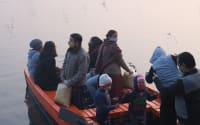
One of the most common medical conditions we find in the maritime environment due to cold is hypothermia.

Medical
15 minutes
Avg. rating 4.6

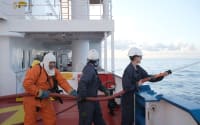
This course is designed for onboard and ashore training shipboard personnel in identifying emergency towing equipment, their uses, and the hazards imposed when these are in use. The learner will reinforce training given during Tanker Safety Courses, and this will provide the development of STCW competencies as well as SOLAS requirements for tanker operations.

Emergency Procedures
38 minutes
Avg. rating 4.5

In this course, Crowd Management, you will get crucial information on how to handle guests during crises and emergencies. Travelling with several guests and being responsible for their lives is just a regular day within the Superyacht industry.

Human Resource
1 hour and 19 minutes
Avg. rating 4.7

This course will help you understand what GDPR (General Data Protection Regulation) is and why is it important in the EU and EEA areas. The GDPR act has brought a level of protection to natural persons in regard to the processing of personal data and the free movement of such data.

Information Technology
36 minutes
Avg. rating 4.0

Welcome to the Confidence course. This course designed to equip you with the essential skills and mindset necessary to have resilience, empathy, and strategic clarity in today's rapidly evolving landscape.

Health and Wellbeing
37 minutes
Avg. rating 3.9

In this course, we will look at effective drug and alcohol prevention. We will cover many aspects ranging from the risks involved to legal requirements and responsibilities of workers and employers.

This course is important for all staff, management and directors.

Regulations and Policies
58 minutes
Avg. rating 4.6

The worst has happened, the ship or boat you are on has to be abandoned, and you find yourself in a liferaft. In the raft, you find a SART. It's up to you to seek assistance. The aim of this course is to give you the knowledge and confidence to use a SART in an emergency.

Life Saving Appliances
27 minutes
Avg. rating 4.8

Optimize efficiency and cut emissions with modern ship propulsion. Standardized fuel parameters ensure proper quality for each system. Marine fuel specs help onboard engineers monitor and optimize treatment, preventing machinery breakdowns and failures.

Engineering
1 hour and 33 minutes
Avg. rating 4.3

Maritime Swedish Vocabulary for Safety and Security is a course specifically made to give you some fundamental knowledge of maritime phrases and vocabulary to be used onboard. The course is aimed at the crew who need to gain some basic understanding of maritime Swedish.

Communications
48 minutes
Avg. rating 4.5

This course will introduce, explain and then teach you how to begin learning the International Regulations for Prevention of Collisions at Sea (Rules of the Road).

Navigation
1 hour and 22 minutes
Avg. rating 4.7

Just culture is a work culture in which crew members do not fear to report errors, own as well as of others because they know that it is important not only for the organisation to learn from these honest mistakes but also for the seafarers’ safety on board. It is also a culture where deliberate misconduct may result in disciplinary action.

Regulations and Policies
37 minutes
Avg. rating 4.2

In 1973, IMO adopted the International Convention for the Prevention of Pollution from Ships, now known universally as MARPOL, which the Protocols of 1978 and 1997 have amended; it has been kept updated with relevant amendments. The MARPOL Convention addresses pollution from ships by oil; by noxious liquid substances carried in bulk; harmful substances carried by sea in packaged form; sewage, garbage and the prevention of air pollution from ships. MARPOL has greatly contributed to a significant decrease in pollution from international shipping and applies to 99% of the world’s merchant tonnage

Regulations and Policies
37 minutes
Avg. rating 4.6