Exciting changes ahead!As part of Seably joining Mintra, we’re preparing to upgrade customers to Trainingportal. Migrations will be phased, and you’ll be fully informed before any changes. Learn more

All Topics

Designed for seafarers seeking to enhance their skills and knowledge in the maritime industry. These comprehensive courses cover a range of topics, including navigation, safety protocols, emergency procedures, and industry regulations.
Courses to Get You Started
    Explore:

  • Course Types:

  • Topics:

  • Ratings:

  • Top Authors:

  • Price:

  • Language:

  • Length:

Many shipping companies have a set of company values. These values are written in the company mission and vision statements, and other similar mottoes prominently displayed in the office lobby, company website and company handbook. Whether the crew members practice those values on board is another matter.

Human Resource
15 minutes
Avg. rating 4.7

What is the worst thing that could happen? "It is only Ballast Water" you might say. However, the consequences of poor Ballast Water Management could cause health problems for many people, financial losses for the company, and also harm the world's ecosystems. There is a reason that this convention entered into force. In this course, you are going to learn more about your role and about different methods for handling Ballast Water.

Regulations and Policies
1 hour and 22 minutes
Avg. rating 4.5

The purpose of this course is to introduce you to the IGF Code. We will follow the fuel's way through the ship. Starting at bunkering to storage and finally, through the fuel system, you will also learn about managing potential risks.

Engineering
3 hours and 28 minutes
Avg. rating 4.7

The worst has happened, the ship or boat you are on has to be abandoned, and you find yourself in a liferaft. In the raft, you find a SART. It's up to you to seek assistance. The aim of this course is to give you the knowledge and confidence to use a SART in an emergency.

Life Saving Appliances
27 minutes
Avg. rating 4.7

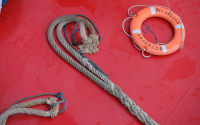
This course is designed for onboard and ashore training shipboard personnel in identifying emergency towing equipment, their uses, and the hazards imposed when these are in use. The learner will reinforce training given during Tanker Safety Courses, and this will provide the development of STCW competencies as well as SOLAS requirements for tanker operations.

Emergency Procedures
38 minutes
Avg. rating 4.5

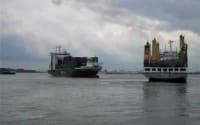
This course will introduce and explain Rules 16 and 17 of the International Regulations for Prevention of Collisions at Sea (Rules of the Road).

Navigation
7 minutes
Avg. rating 4.6

All safety equipment onboard must conform to the requirements of SOLAS Chapter III and the LSA Code. To ensure that the equipment remains in working order, it must be inspected and maintained regularly to ensure that it is ready for use in an emergency.

Life Saving Appliances
24 minutes
Avg. rating 4.5

In this course, you will conceive the complexity of electrical power calculations and know how to work with them.

Engineering
16 minutes
Avg. rating 4.4

Nitrogen systems onboard are required in order to ensure that ships are compliant with the various regulations and to ensure protection of the transportation of sensitive and flammable cargoes. Nitrogen is the purest inert gas medium, hence why it is the preferred solution onboard ships where the possibility of cargo contamination is present. Having said that, it is of paramount importance for crew working on these types of ships to know the hazards of Nitrogen and its proper uses.

Cargo Handling
1 hour and 10 minutes
Avg. rating 4.4

One of the most common medical conditions we find in the maritime environment due to cold is hypothermia.

Medical
15 minutes
Avg. rating 4.6

Welcome to an introductory course on container firefighting where you will learn about different container types, what classes of cargo are stored inside them and how to boundary cool in the case of a fire on board.

Firefighting
30 minutes
Avg. rating 4.6

This course will help you understand what GDPR (General Data Protection Regulation) is and why is it important in the EU and EEA areas. The GDPR act has brought a level of protection to natural persons in regard to the processing of personal data and the free movement of such data.

Information Technology
36 minutes
Avg. rating 4.0