Exciting changes ahead!As part of Seably joining Mintra, we’re preparing to upgrade customers to Trainingportal. Migrations will be phased, and you’ll be fully informed before any changes. Learn more

All Topics

Designed for seafarers seeking to enhance their skills and knowledge in the maritime industry. These comprehensive courses cover a range of topics, including navigation, safety protocols, emergency procedures, and industry regulations.
Courses to Get You Started
    Explore:

  • Course Types:

  • Topics:

  • Ratings:

  • Top Authors:

  • Price:

  • Language:

  • Length:

As vessels continue to increase in size, the power demand rises too, so more powerful engines and other equipment items must also be installed. The increased size and demand on power requires the use of higher voltages on board, enabling the efficient and effective transfer of energy throughout the vessel.

Engineering
47 minutes
Avg. rating 4.3

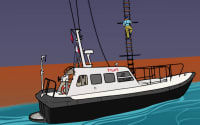
An introduction to the means of safe access to vessels, the correct rigging and maintenance.

Security
14 minutes
Avg. rating 4.7

If you never navigated through the ice before, this is the place to start. Baltice will enhance your knowledge of winter navigation and prevailing conditions in the area during the ice season. Baltic Icebreaking Management, BIM, is an organization with members from all the Baltic Sea states.

Navigation
31 minutes
Avg. rating 4.7

This course provides an in-depth exploration of Electronic Navigational Charts (ENCs), essential tools in modern maritime navigation. Participants will learn about the structure, functionality, and application of ENCs within Electronic Chart Display and Information Systems (ECDIS). The course covers key topics such as voyage planning with ENCs, understanding ENC accuracy and the importance of the Category Zone of Confidence (CATZOC), as well as the procedures for installing and updating ENCs.

Navigation
35 minutes
Avg. rating 4.6

Under SOLAS requirements, vessels must complete drills on board at regular intervals to ensure that personnel and equipment are ready for emergencies that may develop. STCW amendments also require training to be conducted onboard to allow seafarers to renew their STCW certification without the need to complete the full course again every 5 years. Making the drills effective and useful is, therefore, a priority for vessel managers and Masters to ensure the training is relevant, no time is wasted and the seafarers receive value from the exercises.

Emergency Procedures
27 minutes
Avg. rating 4.2

This IAMI GUEST Valet Service and Wardrobe Management Level 2 course is an intensive Learning Experience designed to develop your skills and knowledge in delivering and managing top-class services on board and understanding valet-related topics.

Interior and Service
1 hour and 1 minute
Avg. rating 4.3

This course is designed to teach maritime security professionals how to properly apply handcuffs to both compliant and non-compliant individuals.

This course covers mandates in the ISPS Code and SOLAS (Chapter 13 - Training)

Security
48 minutes
Avg. rating 4.6

This course introduces the Parallel and Plane Sailings which are common navigational calculations for determining courses and distances for passage planning & rendezvous. These are short-distance calculations for runs of less than 600 Nautical Miles, or directly East/West along a single line of latitude.

Navigation
19 minutes
Avg. rating 4.6

When you give corrective feedback to people, you aim at motivating them to change their actions or behaviours and improve their performance. To reach that goal, feedback must be expressed in a constructive manner.

Leadership and Management
25 minutes
Avg. rating 4.4

The science of human performance studies how people interact with their work environment to complete tasks efficiently and effectively. This field of research aims to understand the factors that influence employee productivity so businesses can create optimal work conditions and improve worker productivity.

Human Resource
16 minutes
Avg. rating 4.1

This course aims to respond to the needs highlighted by the Hong Kong Convention of 15/05/2009; by Regulation (EU) no. 1257 of 11/20/2013 (amended by ‘Regulation (EU) 2024/1157’); by the Decree of the MIT of 27/05/2019; from the IHM Guidelines, resolution MEPC.269 (68) of 15 May 2015.

Environment and Sustainability
1 hour and 13 minutes
Avg. rating 4.2

Do you know how many different chemicals are used in the engine room of the ships? There are various chemicals supplied to be used on ships. Being useful, the majority of these chemicals onboard have hazards!

Engineering
34 minutes
Avg. rating 4.6