Exciting changes ahead!As part of Seably joining Mintra, we’re preparing to upgrade customers to Trainingportal. Migrations will be phased, and you’ll be fully informed before any changes. Learn more

Risk Management

Understand the principles of risk assessment and management in the maritime industry, addressing potential hazards and mitigating strategies.
    Course Types:

  • Ratings:

  • Top Authors:

  • Price:

  • Language:

  • Length:

Ships are inherently dangerous workspaces, made doubly so by the fact that they move and rock while underway. Slips, trips and falls are therefore one of the most prevalent ways for personnel to injure themselves if correct precautions are not taken.

Personal Safety
23 minutes
Avg. rating 4.5

The Suez Canal is one of the world's largest and most important shipping routes. In the spring of 2021, it was blocked by a navigation incident onboard the Evergreen container vessel, The Ever Given. This had wide-ranging implications for the shipping industry and global trade as a whole.

Navigation
9 minutes
Avg. rating 4.5

Containers are now responsible for the vast majority of cargo moved around the world. The safety precautions, regulations and operations of container vessels are important for the correct shipping of these vital cargo packages.

Cargo Handling
49 minutes
Avg. rating 4.6

It is important to develop cultural understanding to improve communication across cultures during work and off-work time aboard. Further, understanding cultural differences & similarities as well as reaching a cultural self-awareness level to help the crew avoid and manage conflicts caused by multi-culturalism.

Human Resource
16 minutes
Avg. rating 4.4

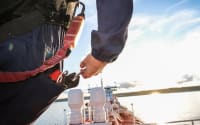
Falling to a lower level is one of the most common workplace accidents, and falling from even a low height can be fatal. Working at Height is a course that gives basic knowledge of personal falling protection. When do you need to protect yourself or your employees from falling, how do you do it, and what equipment do you need?

Deck Operations
24 minutes
Avg. rating 4.5

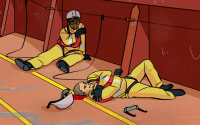
This incident is based on the experiences of the UK P&I Club. Accidents like the one in this course can and do happen. As you go through this course, ask yourself, "Could this happen on my ship?"

Engineering
10 minutes
Avg. rating 4.6

Work debrief is an informal conversation among team members after the job completion. It allows everyone to reflect on the job, to discuss what went well, what did not and to come up with improvement ideas.

Risk Management
13 minutes
Avg. rating 4.3

The Hand Tools Safety course shows the learner how to safely select, use, maintain and store hand and power tools on board ships. This course identifies the correct PPE to be worn when using tools and the potential consequences of incorrect use of hand tools on board.

Personal Safety
33 minutes
Avg. rating 4.6

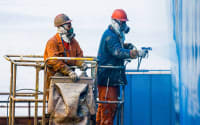
The work environment onboard ships is extremely complex, containing various hazards and risks. Due to this, rules and regulations were introduced to create a standard onboard, ensuring a better and safer work environment. This is done by the implementation of safety management systems and by training seafarers to recognise everyday risks and hazards and understands how they can mitigate them by the use of personal protective equipment and safe working practices.

Regulations and Policies
1 hour and 35 minutes
Avg. rating 4.2

Covid-19 has been a major negative stress factor for crew and shipping organisations. The seafarer is one of the most exposed working groups to mental illness, as onboard life can be isolated, have long working hours, unhealthy food habits, give less qualitative sleep and entail stressful situations. Mental health has for a long time been stigmatised and shameful. The truth is that this is as much real as our physical health and actually these two are connected in several ways! It is time to skip the shame and bring mental health to the table.

Health and Wellbeing
1 hour and 4 minutes
Avg. rating 4.6

When you successfully complete the course "Security Awareness Training" you will have the required standard of competence. This enables you to contribute to the enhancement of maritime security through heightened awareness, the ability to recognise security threats and to respond appropriately.

Security
3 hours and 9 minutes
Avg. rating 4.5

The work environment onboard ships is highly complex, containing various hazards and risks. Due to this, rules and regulations were introduced to create a standard onboard, ensuring a better and safer work environment. This is done by implementing safety management systems and training seafarers to recognise everyday risks and hazards and understand how they can mitigate them by using personal protective equipment and safe working practices.

Health and Wellbeing
2 hours and 36 minutes
Avg. rating 4.6